Cartagena and surroundings
Oil 0W-20, and between 3,5 and 4,4 liters depending on the engine. If you don't know what those numbers mean or which engine you got, this page explains it from scratch.
The CR-V of that year came with two different engines, and they don't take the same thing.
1.5 turbo
1.498 cm³ · 1.5 turbo engine
3,5 liters
Counting the new filter
2.4
2.356 cm³ · 2.4 engine
4,4 liters
Counting the new filter
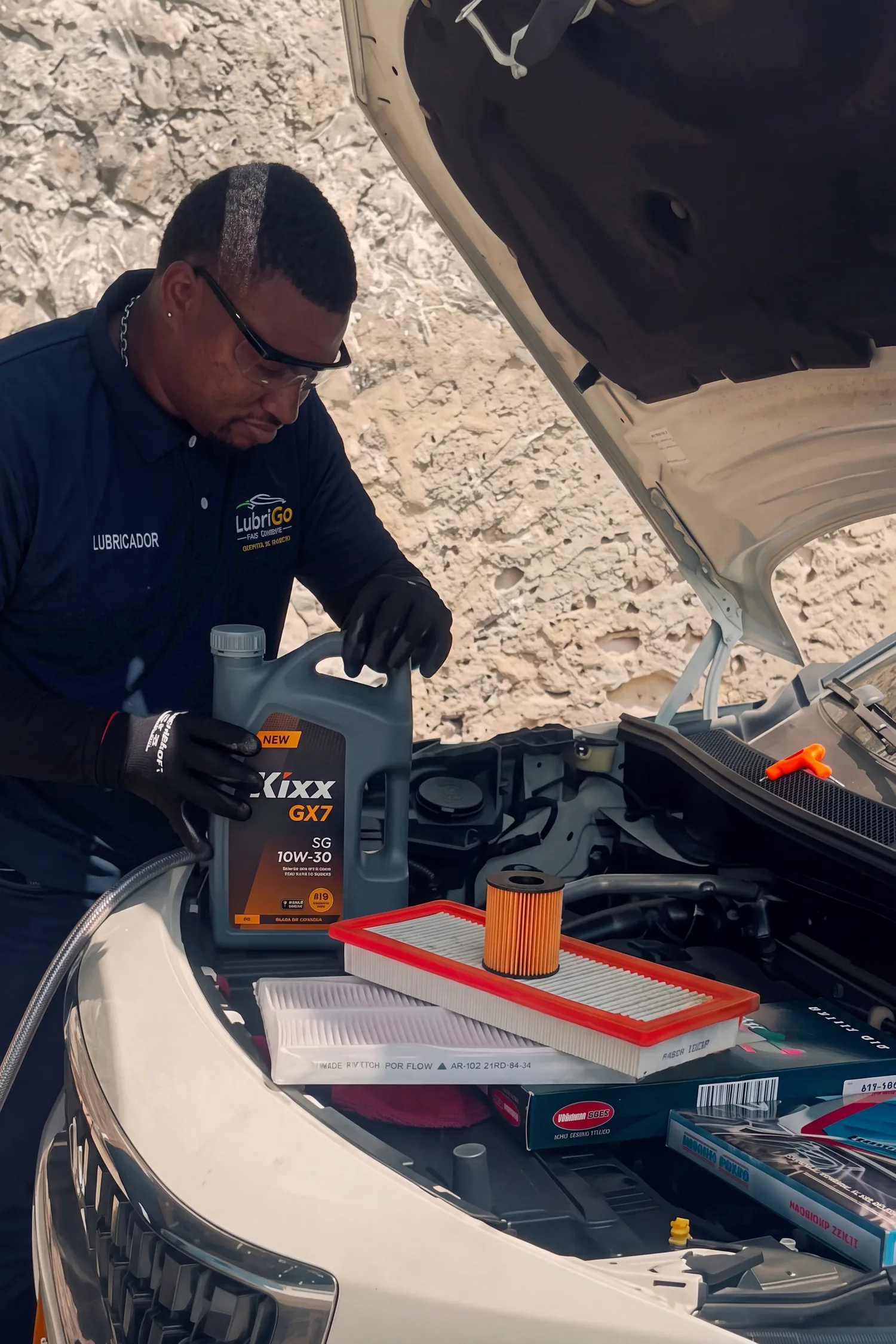
If you've never sat down to look at this before, here's everything behind those figures.
It isn't a brand and it isn't a quality rating. They are two numbers telling you how thick the oil is, and each one is about a different moment.
The 0W is the engine cold, just started. The W stands for winter. The lower the number, the faster the oil flows the moment you start up, which is when an engine wears most.
The 20 is the engine hot, after a few minutes of driving. That's the number doing the work almost all the time in Cartagena, where a car never wakes up frozen.
Next to the grade there's the API seal. That is the standard, and it's the part almost nobody looks at.
The standard is the seal Honda puts on the oil it tested in this engine and approved. A bottle can say 0W-20 in big letters on the front and not carry the seal: the grade is the same, but it isn't the oil the manufacturer approved.
That's why the standard outranks the brand on the bottle. If it meets the standard, it works; if it doesn't, it makes no difference how nice the label looks.
Because they aren't the same engine, even though the car is called the same on the outside. The 1.5 turbo has 1.498 cubic centimetres and the 2.4 has 2.356.
Those cubic centimetres are the space the pistons sweep inside the engine. A bigger engine has bigger parts, more surface to lubricate and more passages to fill, so it needs more oil to reach everywhere at the right pressure.
Hence the difference of 0,9 liters. That's why we always ask the engine size before we set out: bringing the 2.4 the 1.5 turbo's quantity leaves it short.
Two ways, from the easiest to the most reliable:
If you're not sure, send us a photo of your registration card on WhatsApp and we'll tell you which one it is.
Honda recommends 0W-20 and asks that the container carry the API certification seal. That's what the manual says, and that's what you should expect.
The manual adds that another viscosity may be used if it suits the ambient temperature, and refers you to a table of its own. We don't reproduce that table here because in the document it is an image and we couldn't read it with confidence — and we'd rather not tell you from memory something we haven't verified.
So if someone brings you something else, it's fair to ask them to show you where it falls on the manual's table. What isn't up for discussion is the API seal on the container.
Nothing blows up the next day, which is why plenty of people never find out. What happens is slower: an oil that's too thick takes longer to reach the top of the engine when you start it, and one that's too thin can't hold up under pressure with the engine hot. Either way, wear runs faster than it should.
And being short on liters is worse than the wrong grade: if oil is missing, the pump starts sucking air and some parts run for a while with no lubrication. That's why we always ask which trim you have before we set out.
The full change —synthetic oil and filter, done wherever the car is— starts at $240.000. The price moves with the number of liters the engine calls for. Message us with your car's engine and we'll give you the exact figure before we set out.
We come to your home, your workplace or wherever you have the car parked. Nothing to drop off, no queue.
Ask for the price on WhatsAppWe didn't take these from our own experience or from a blog: they are the documents Honda publishes for this car. You can open them and check for yourself.
Tell us the make, model and year —or send us a photo of your registration card— and we'll tell you which oil it takes and what the change costs.
Ask on WhatsApp