Cartagena and surroundings
Oil 5W-30 or 0W-20 depending on the gearbox, and 3,5 liters. If you don't know what those numbers mean or which gearbox you got, this page explains it from scratch.
The Onix of that year came with two different gearboxes, and they don't call for the same oil.
5-speed manual gearbox
3,5 liters
Counting the new filter
Oil 5W-30
6-speed gearbox
3,5 liters
Counting the new filter
Oil 0W-20
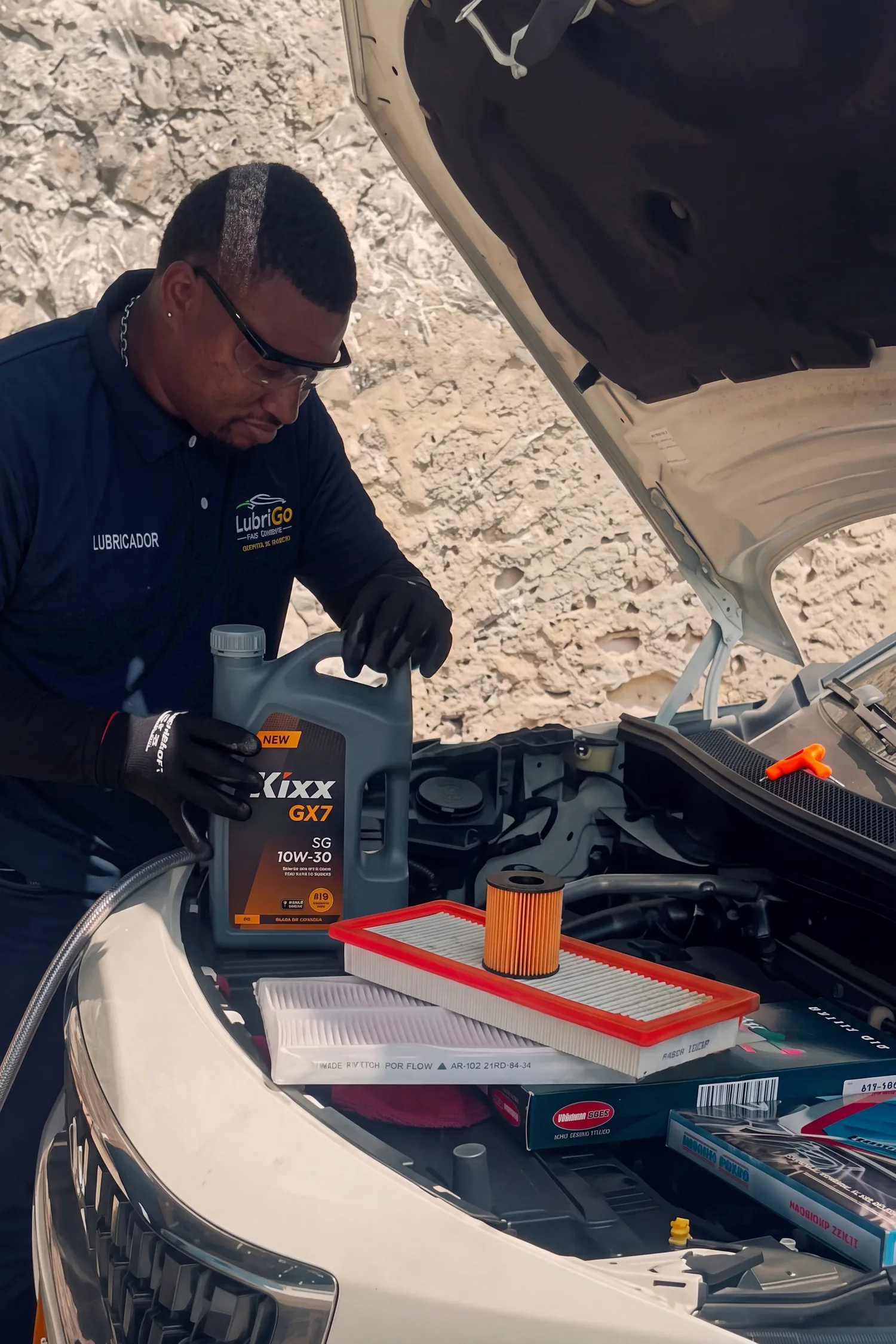
If you've never sat down to look at this before, here's everything behind those figures.
It isn't a brand and it isn't a quality rating. They are two numbers telling you how thick the oil is, and each one is about a different moment.
The 5W is the engine cold, just started. The W stands for winter. The lower the number, the faster the oil flows the moment you start up, which is when an engine wears most.
The 30 is the engine hot, after a few minutes of driving. That's the number doing the work almost all the time in Cartagena, where a car never wakes up frozen.
Next to the grade there's dexos1. That is the standard, and it's the part almost nobody looks at.
The standard is the seal Chevrolet puts on the oil it tested in this engine and approved. A bottle can say 5W-30 in big letters on the front and not carry the seal: the grade is the same, but it isn't the oil the manufacturer approved.
That's why the standard outranks the brand on the bottle. If it meets the standard, it works; if it doesn't, it makes no difference how nice the label looks.
It sounds odd, and it's the fairest question on this whole page: the gearbox has its own oil, separately. Why would it have any say over the engine's?
Because the engine doesn't work the same way with one gearbox as with the other. With more gears, the engine spends more time at low revs and the manufacturer tunes the whole package to burn less fuel. A thinner oil helps with that, and Chevrolet tested and approved it that way.
That's why the same Onix, with the same 1.389 cubic centimetre engine, calls for 5W-30 with the 5-speed manual gearbox and 0W-20 with the 6-speed. The quantity is the same either way: 3,5 liters in both cases.
This one is easy, and you don't have to open anything:
If you're not sure, send us a photo of your registration card on WhatsApp and we'll tell you which one it is.
Nothing blows up the next day, which is why plenty of people never find out. What happens is slower: an oil that's too thick takes longer to reach the top of the engine when you start it, and one that's too thin can't hold up under pressure with the engine hot. Either way, wear runs faster than it should.
And that's why we ask which gearbox you have before we set out: it's the difference between bringing you the oil your car calls for and bringing you something similar.
The full change —synthetic oil and filter, done wherever the car is— starts at $240.000. The price moves with the number of liters the engine calls for. Message us with your car's gearbox and we'll give you the exact figure before we set out.
We come to your home, your workplace or wherever you have the car parked. Nothing to drop off, no queue.
Ask for the price on WhatsAppWe didn't take these from our own experience or from a blog: they are the documents Chevrolet publishes for this car. You can open them and check for yourself.
Tell us the make, model and year —or send us a photo of your registration card— and we'll tell you which oil it takes and what the change costs.
Ask on WhatsApp